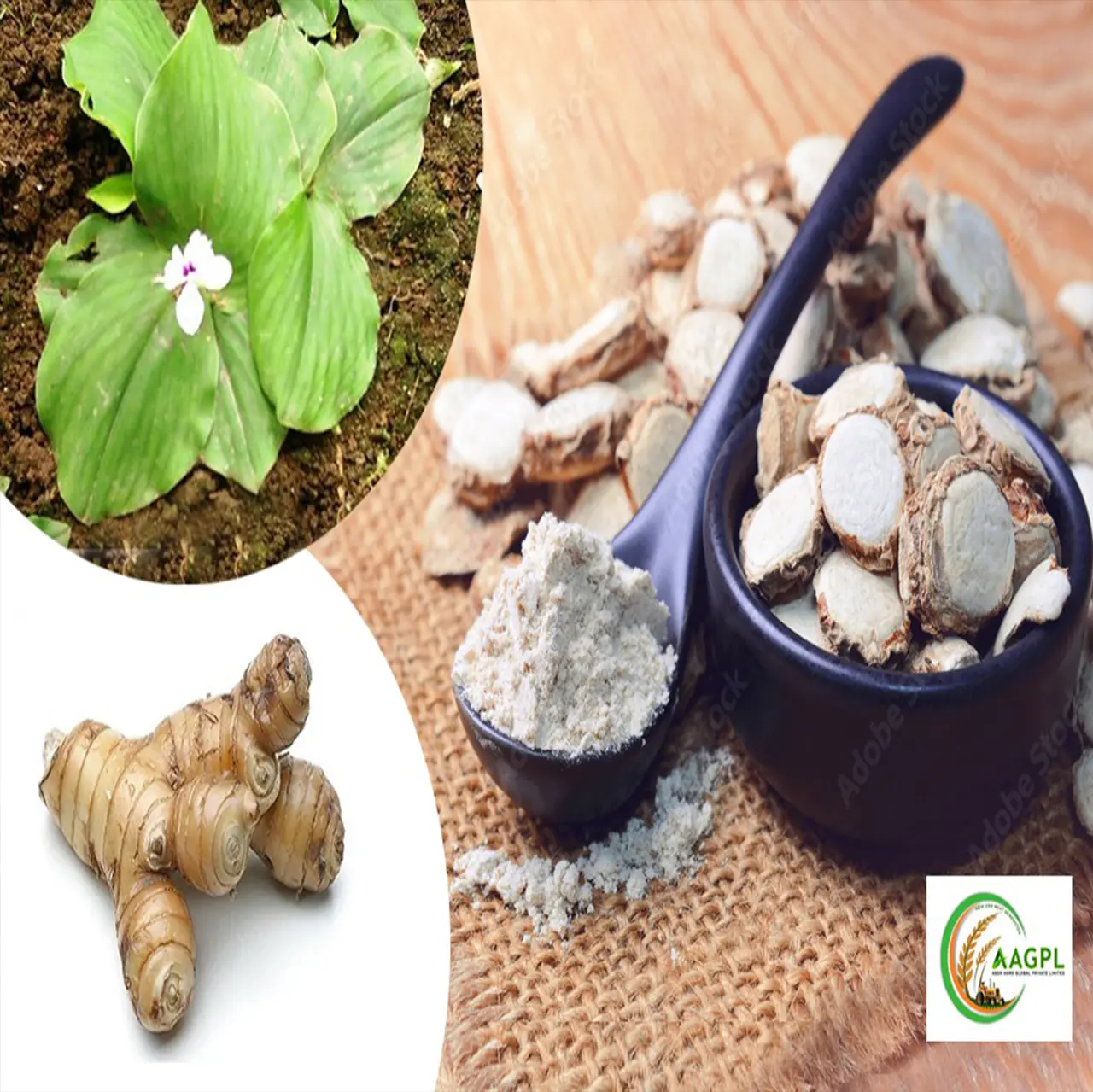
Zedoary Roots
About Zedoary Roots ( Kapur Kachri)
Cultivation of Zedoary Roots in West Bengal, India
Climate and Soil Requirements:
- Climate: Zedoary thrives in tropical climates with high humidity and temperatures ranging from 20-30°C.
- Soil: Well-drained soil with a pH between 5.5-6.5 is ideal for cultivation.
Cultivation Practices:
- Planting: Rhizomes are planted during the monsoon season (June-July) at a depth of 5-7 cm and spaced 30-40 cm apart.
- Irrigation: Regular watering, particularly during germination, is crucial.
- Fertilization: Organic manure and conventional fertilizers like urea and phosphate are commonly used.
- Pest and Disease Management: Organic methods are preferred, with regular monitoring to prevent issues.
Harvesting:
- Zedoary roots are typically harvested after 8-10 months, indicated by yellowing and drying of leaves.
- Post-harvest, rhizomes are carefully dug up, cleaned, and dried for market.
Major Producing Districts in West Bengal:
- Notable districts include Murshidabad, Nadia, Hooghly, Howrah, and Bankura.
Challenges and Opportunities:
- Challenges: Disease management, market fluctuations, and climate change pose ongoing challenges.
- Opportunities: Increasing demand for organic and medicinal products presents opportunities for growth, as does potential for value addition and exports.
Uses and Products of Zedoary Roots
Traditional Uses:
- Ancient Era: Used in Ayurvedic medicine for digestive issues, fever, and skin ailments, and in Hindu rituals.
- Medieval Era: Continued use in Unani medicine and traditional remedies.
- Modern Era: Still integral to Ayurvedic treatments, herbal supplements, and cosmetics.
Products Derived from Zedoary Roots:
- Tea: Supports digestion, relieves nausea, and reduces inflammation.
- Capsules: Promotes digestive health, stress reduction, and sleep improvement.
- Powder: Used as an anti-inflammatory and antioxidant in various formulations.
- Tincture: Aids liver health, reduces fever, and alleviates digestive issues.
- Ointment: Topically reduces pain and inflammation in muscles and joints.
- Essential Oil: Used in aromatherapy for stress relief and mood enhancement.
- Juice: Boosts immune function, reduces inflammation, and enhances overall health.
Future Trends and Opportunities in the Zedoary Roots Market
- Herbal Medicine Demand: Growth driven by increasing interest in natural remedies.
- Wellness Industry: Expanded use in spas and wellness programs for stress relief.
- Food and Beverage: Natural flavoring and spice applications in specialty and organic markets.
- Cosmetics and Skincare: Anti-inflammatory and antioxidant properties utilized in skincare products.
- E-commerce and Global Market: Accessibility to a wider consumer base through online platforms.
- Sustainability Focus: Demand for organically and sustainably cultivated zedoary roots.
- Value-added Products: Potential for capsules, powders, and teas to enhance market value.
- Export Potential: Opportunities to export to markets like the USA, China, and Europe.
- Research and Innovation: Continued exploration for new uses and benefits.
In conclusion, zedoary roots have a promising future in various sectors due to their historical significance, medicinal properties, and adaptability to modern market demands. As consumer awareness grows and new applications are discovered, the market for zedoary roots is expected to expand significantly.